What is WebRTC? A full guide to how it works, where it is used, and how it communicates
What's WebRTC?
What is WebRTC?
A plain explanation of the technology behind real-time communication, and of where it is used
WebRTC stands for Web Real-Time Communication: an open communication technology that lets browsers exchange audio, video and data in real time.
It was put forward by the W3C (World Wide Web Consortium), the standards body for web technology, as the definition of an API for real-time communication.
Communication apps such as LINE and Skype use closed, proprietary technology; WebRTC is open technology that anyone is free to use and implement.
That generality and extensibility have led to wide adoption, by companies and organizations alike.
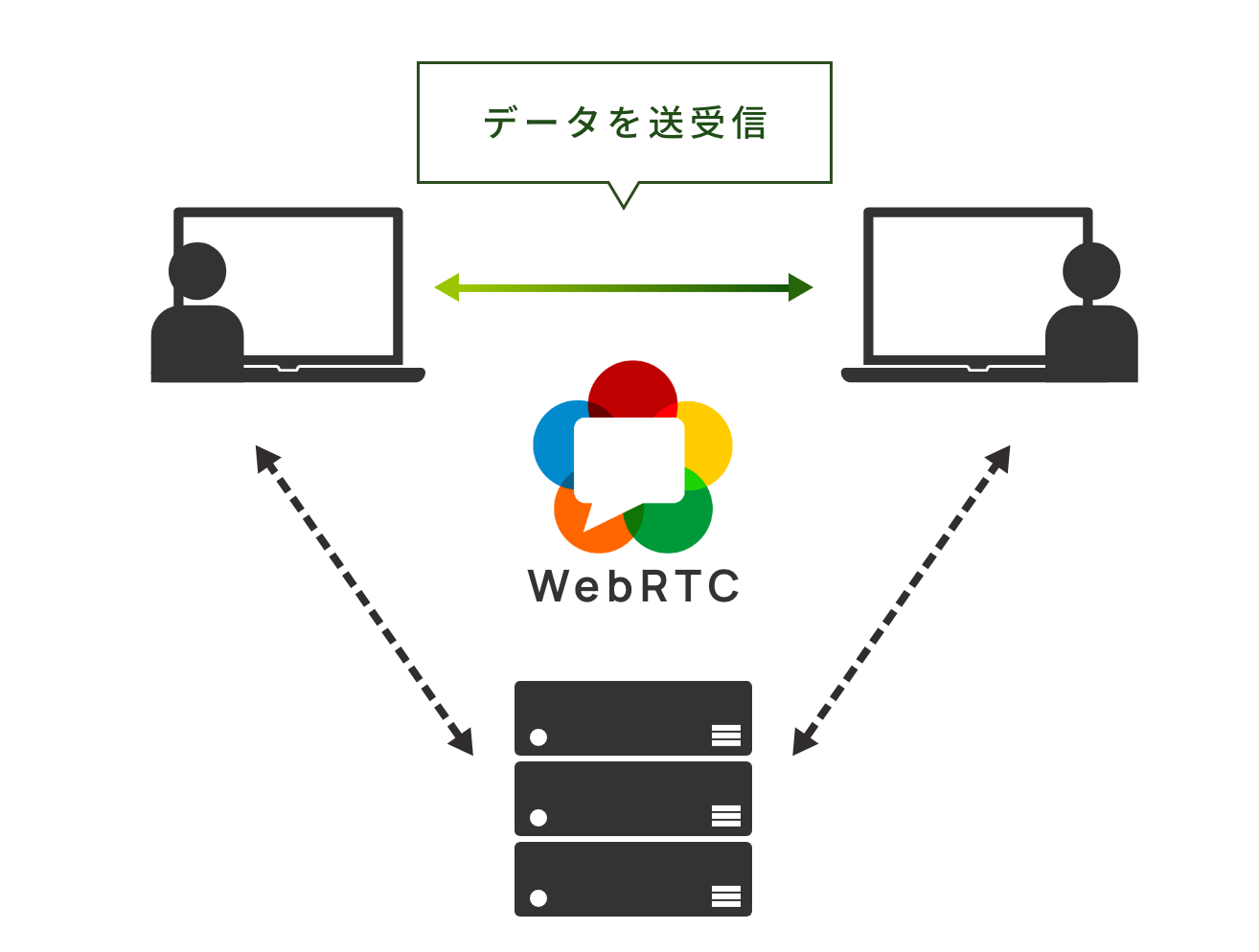
Video, audio and data can be sent and received between peers and devices, and it is available in every major browser as an ordinary JavaScript API.
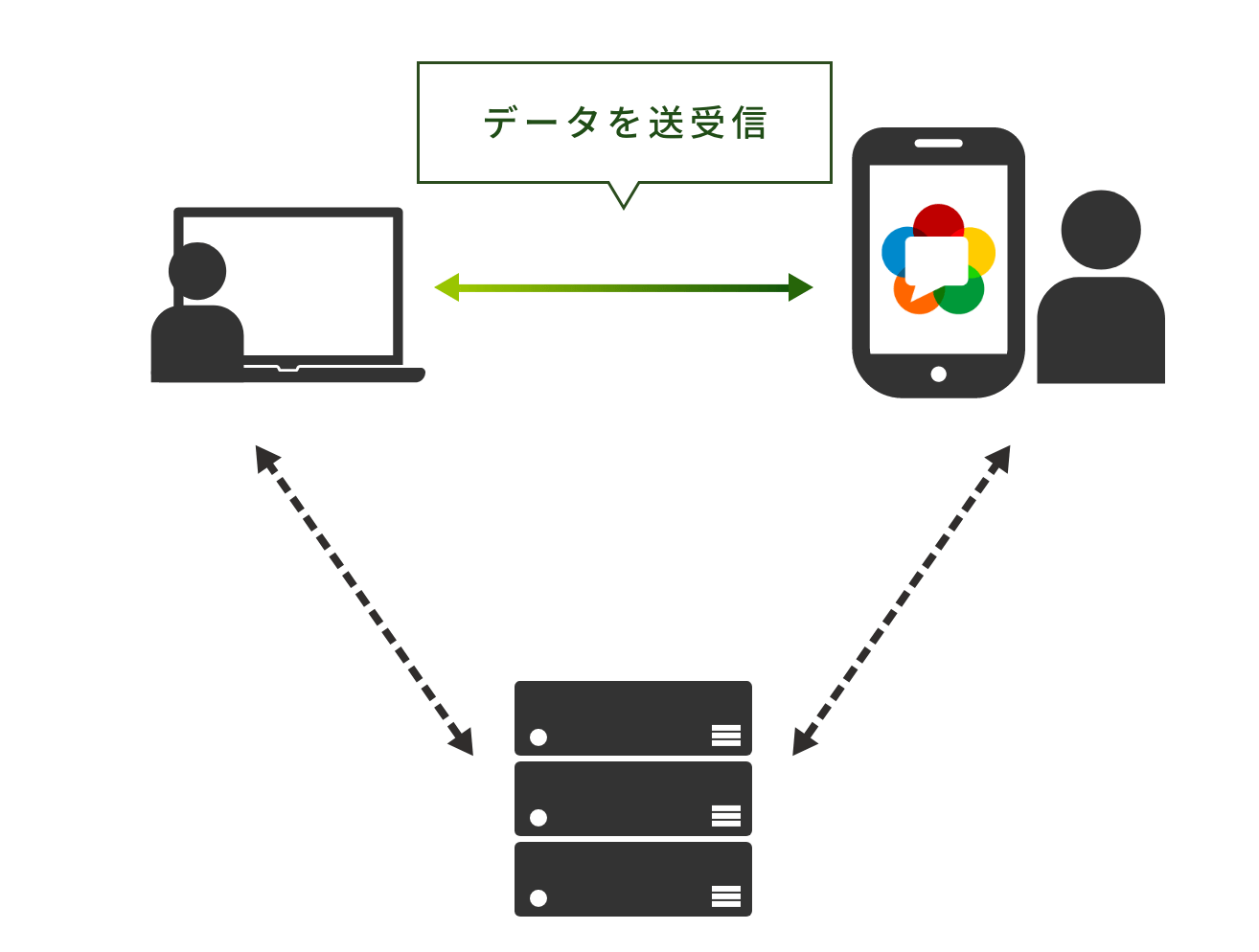
For native clients such as Android and iOS applications, libraries offering the same capability are available.
Where WebRTC is used
WebRTC is open source and highly general, exchanges video and audio in real time, is light on the connection, and works across platforms without a plugin - which makes it very effective wherever video or audio has to reach somewhere despite constraints of time or place.
It is used in many situations, and adoption is under way across a wide field: video conferencing, education, entertainment, broadcasting, monitoring, remote control and healthcare.
Combined with AI, or with a company's own services and systems, it promises uses wider still.
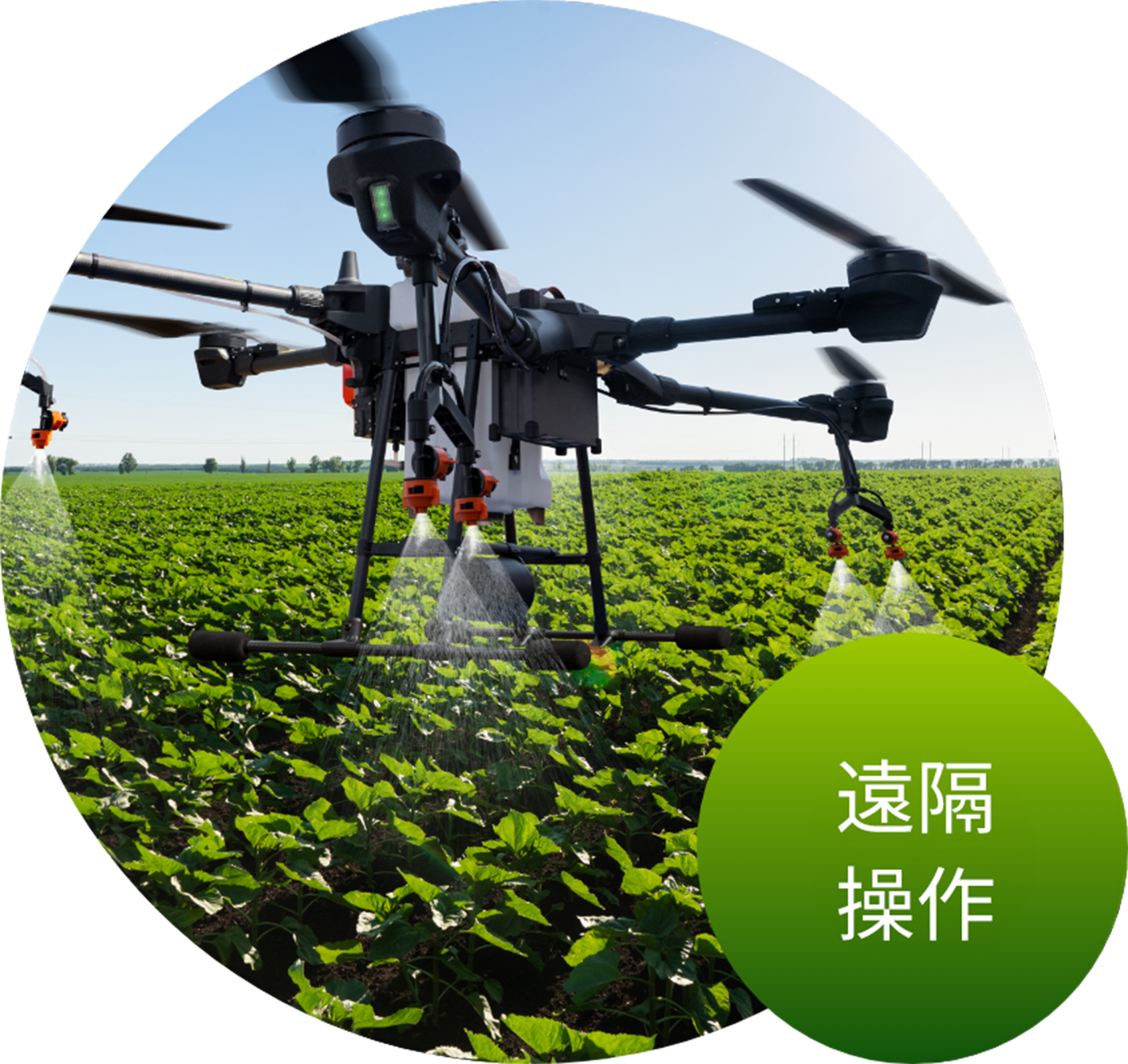
Flying agricultural drones and driving unmanned farm machinery, watching for pest animals and guarding against theft with monitoring cameras - WebRTC puts real-time control in the operator's hands from far away.
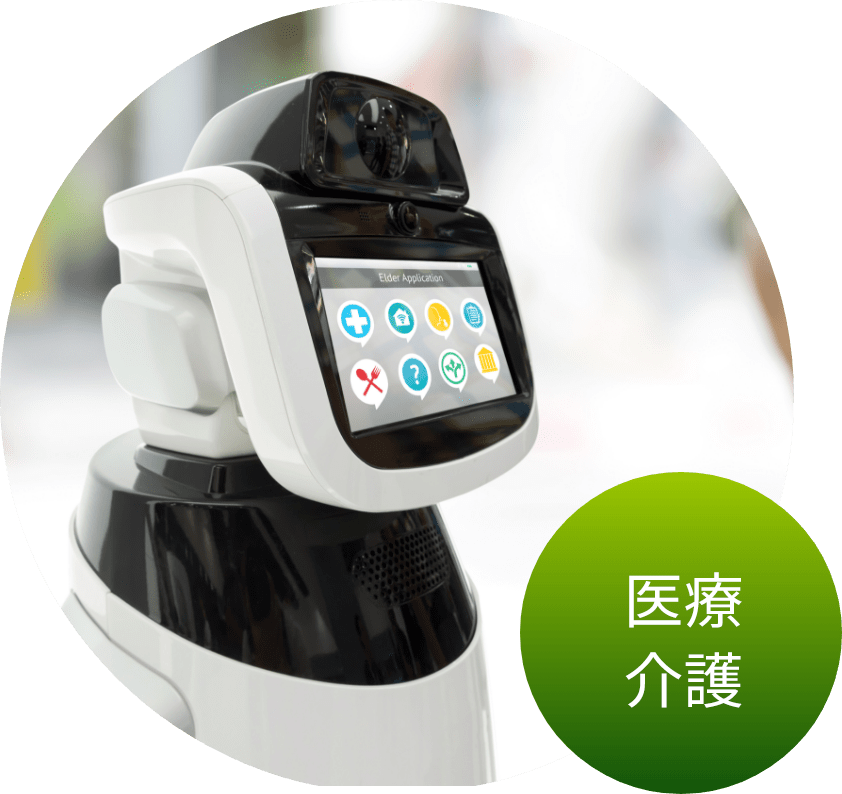
Watching over people with care robots, examining patients at a distance, giving instruction and support on care and medical equipment - WebRTC carries high-quality video and audio in real time.
Bringing ICT into schools under the GIGA School program, online classes at cram schools and specialist colleges, one-to-one music and sports coaching - WebRTC makes learning take many more forms.

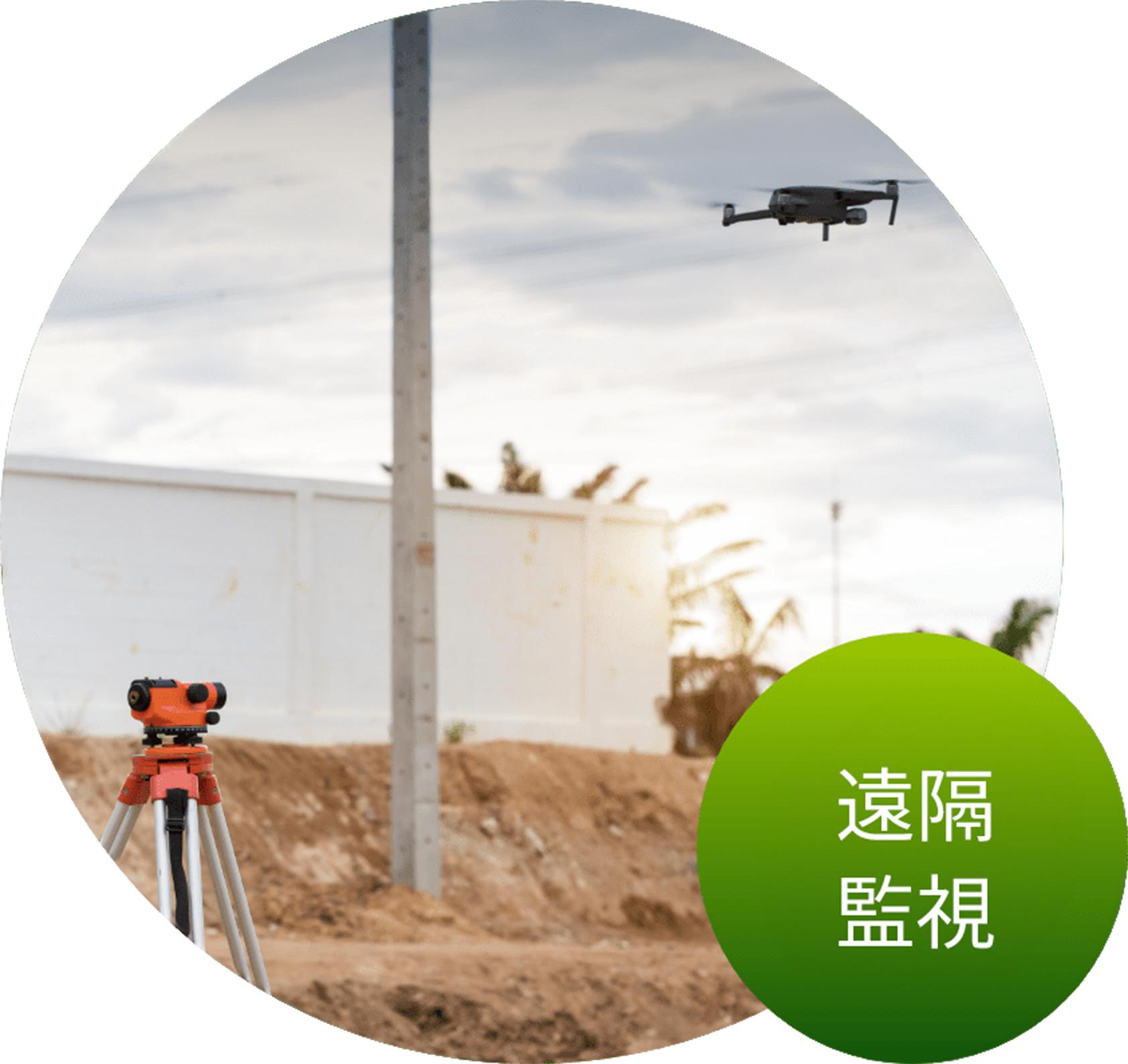
Surveying and inspection by drone, tracking construction progress and safety with live cameras, unmanned heavy machinery - WebRTC lets it all be watched remotely in real time.
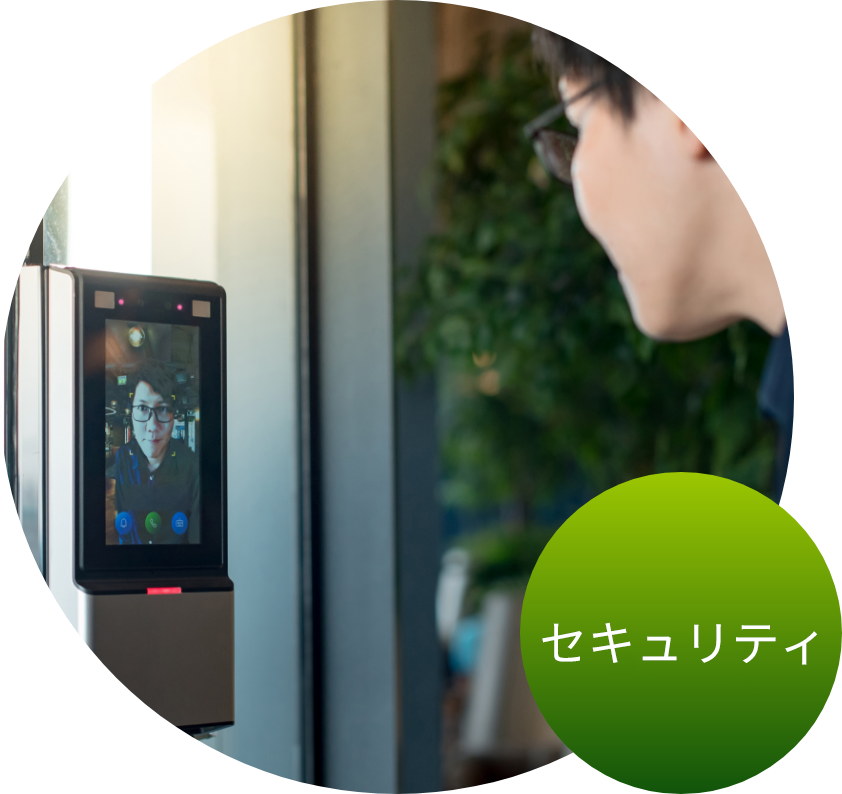
Office security gates, payment services, web services and devices of every kind - security is strengthened by linking them to face recognition built on WebRTC.
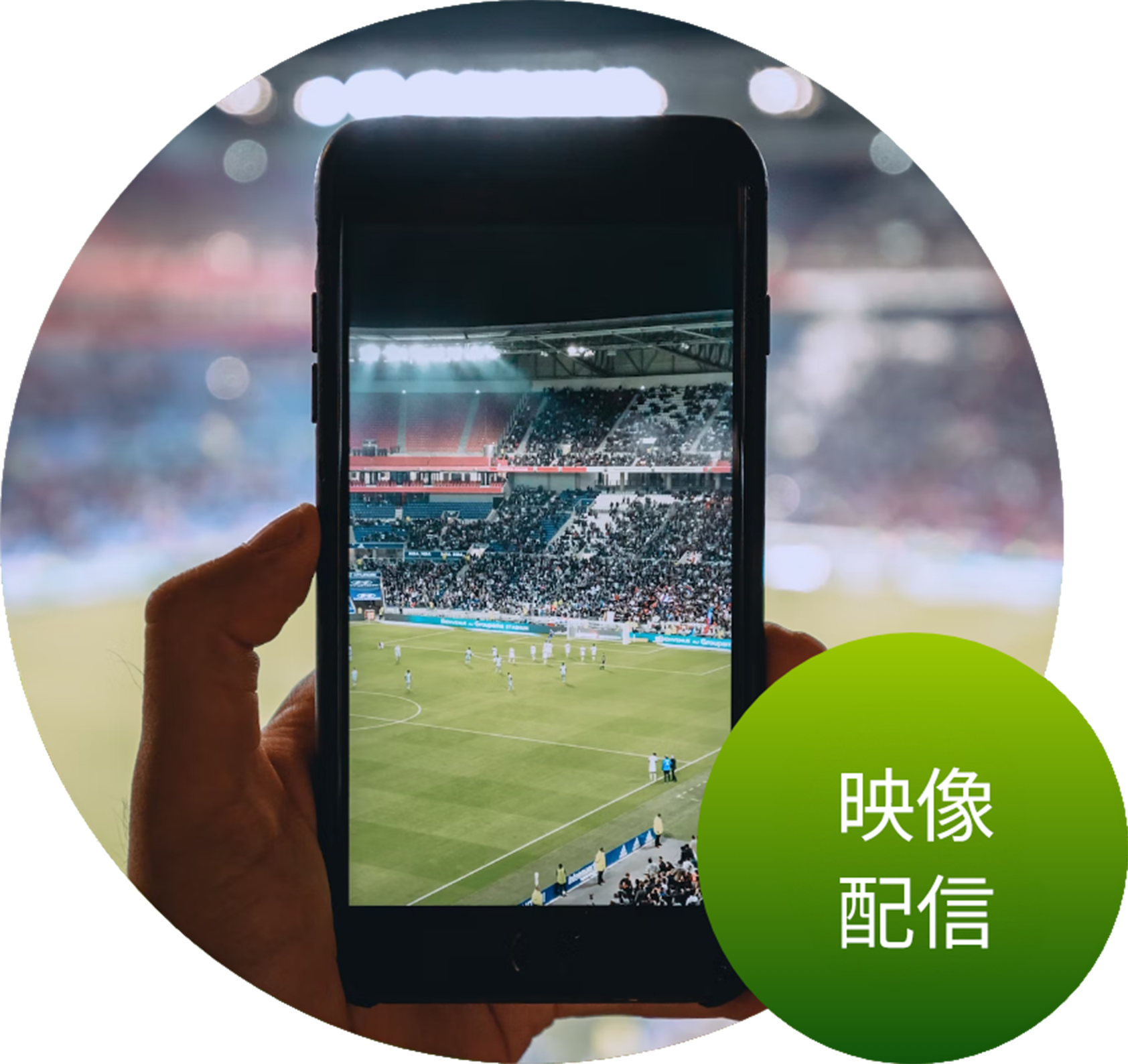
Watching a live concert or a match, remote relays from a tourist spot or an event venue - WebRTC streams vivid real-time video.

WebRTC transport modes
P2P, MCU, SFU
WebRTC has the three transport modes below. Each one and its characteristics are explained in detail.
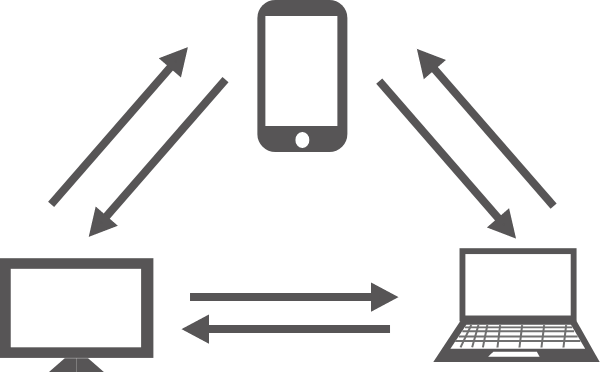
Devices such as PCs and phones send and receive video and audio directly between themselves, without going through a server. It suits video chat between one person and one other, or a small group.
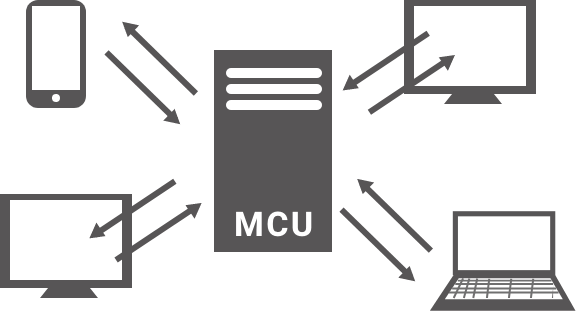
The video and audio each device sends to the server are composited into a single video and audio stream. Each device therefore needs only one stream up and one down, so the load on a device does not change however many others it is exchanging video and audio with. In exchange, the load on the server doing the compositing goes up.
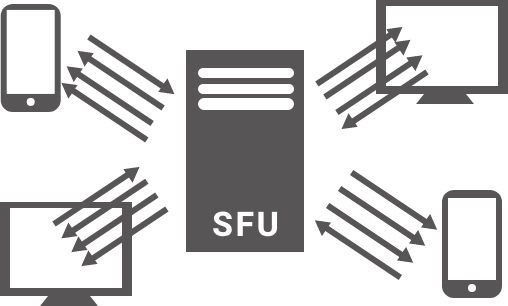
The video and audio each device sends to the server are distributed to the other devices. The server passes on what it receives without processing it. The load is shared between the devices and the server.
The technology behind WebRTC
Even P2P actually uses a server?
WebRTC is not purely peer-to-peer: a signaling server is needed to start the connection. Only after the devices have exchanged, through that signaling server, the connection details such as IP address and port number and the format details of the audio, video and data - bandwidth, encoding method, encoding parameters, frame rate - can they finally talk to each other directly.
ICE, the information WebRTC needs to connect
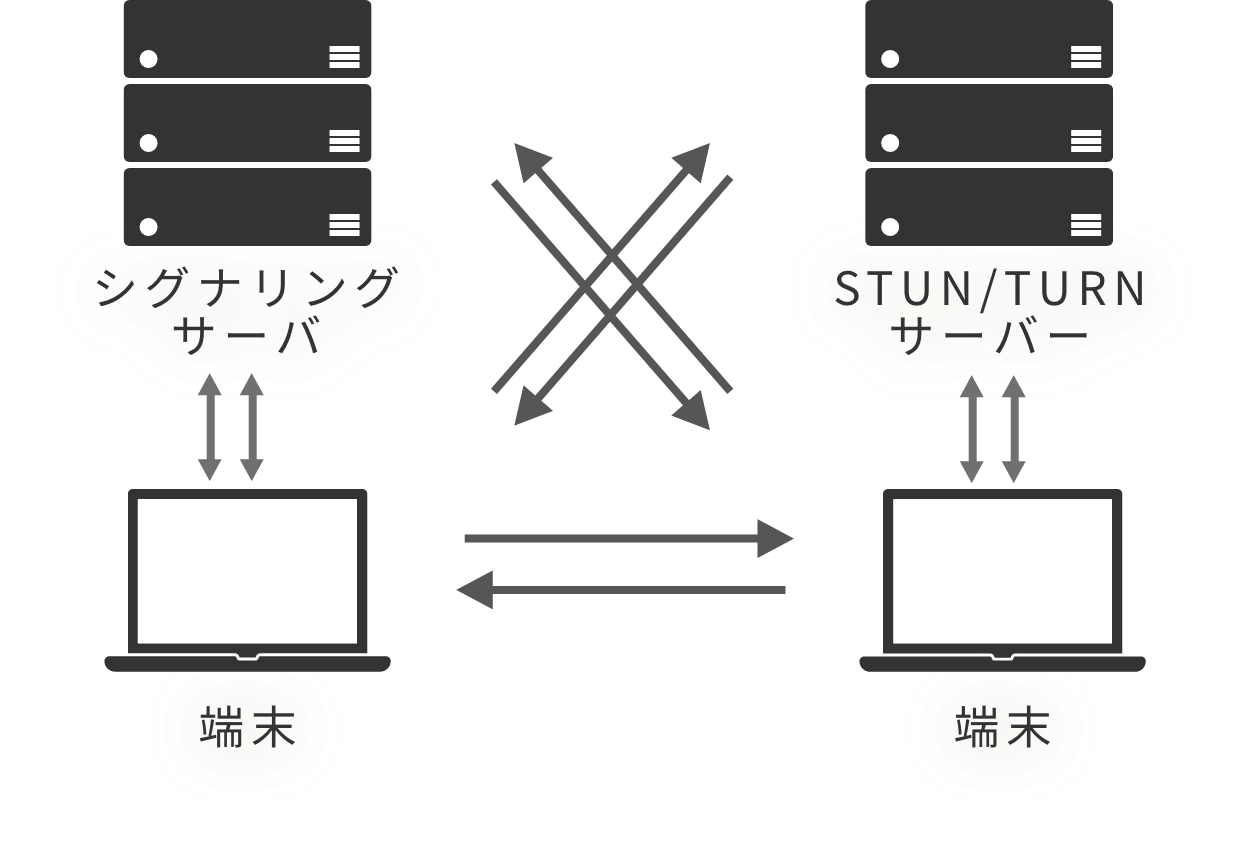
ICE is the mechanism for getting through NAT so that peer-to-peer communication can happen.
What is NAT?
How ICE works
ICE uses a STUN server and a TURN server to get through NAT.
A STUN server tells a device its own IP address as seen from outside, and whether NAT traversal is needed.
When it is, a TURN server translates IP addresses and port numbers and bridges the peer-to-peer connection. The connection to the other device uses SIP (Session Initiation Protocol), which only creates, changes and ends the session.
WebRTC needs NAT traversal to work
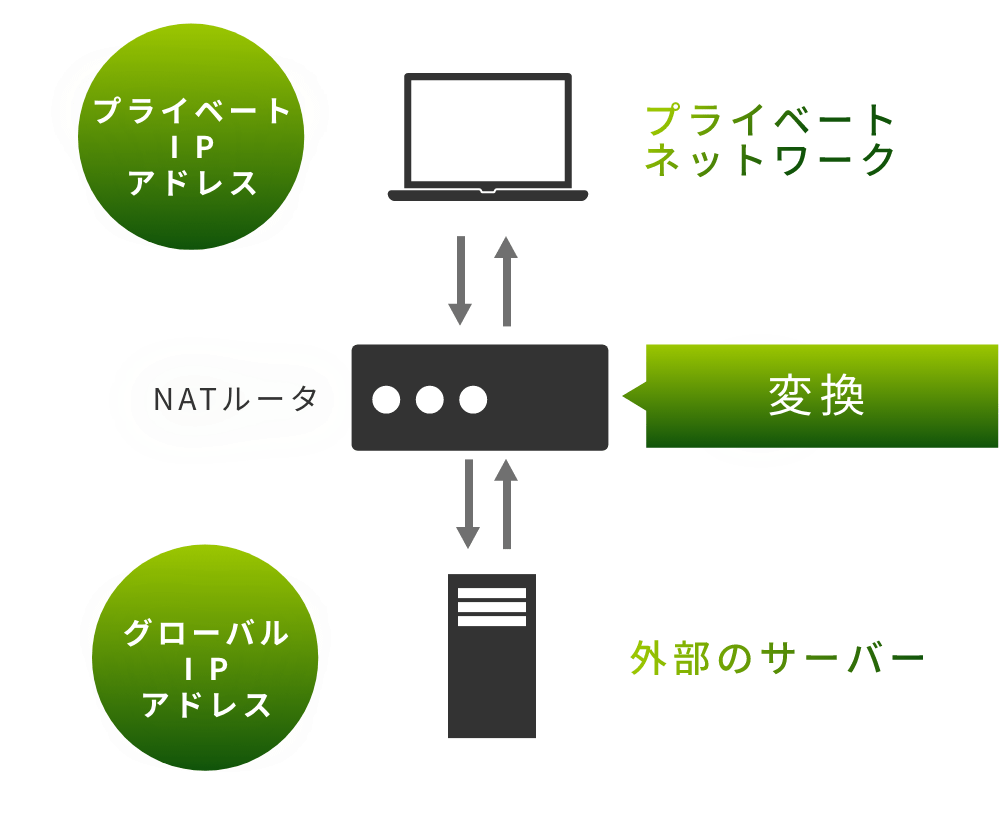
What is NAT?
When a computer connects to the internet over Wi-Fi or similar, it is given a private IP address rather than the global IP address the provider assigns. The technology that translates automatically between global and private IP addresses, so that data flows smoothly, is called NAT (Network Address Translation).
NAT assumes the connection goes from the private network out to an external server, so the reverse - an external server reaching a device inside the private network - is not possible. That is why peer-to-peer communication requires NAT traversal.
The future WebRTC changes
We have looked at what WebRTC offers. To say it once more: WebRTC can send and receive
large volumes of data such as video and audio in real time.
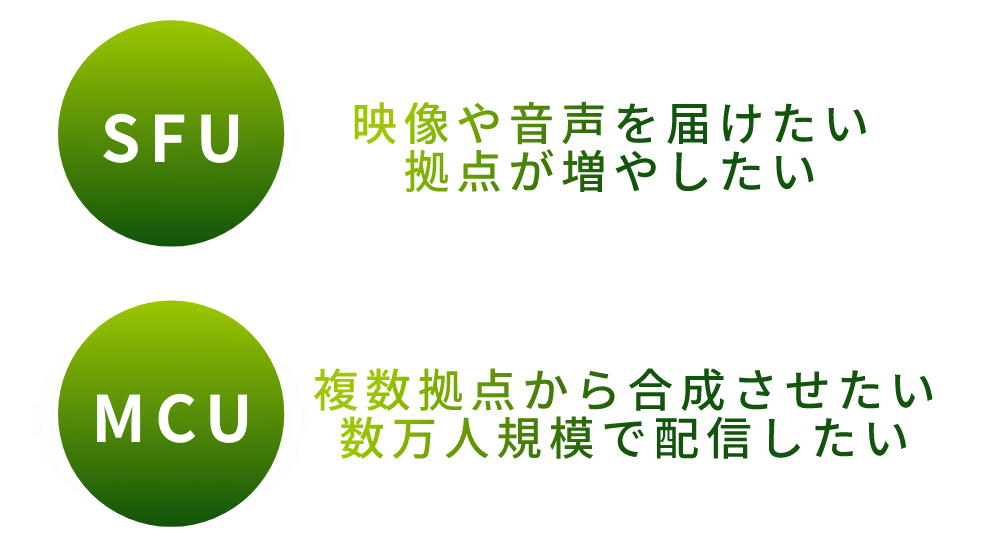
SFU and MCU As the number of sites that need the video and audio grows, SFU is used to cut down the number of connections. Where input from several sites has to be composited, or where the stream must reach tens of thousands of people, MCU comes into its own.
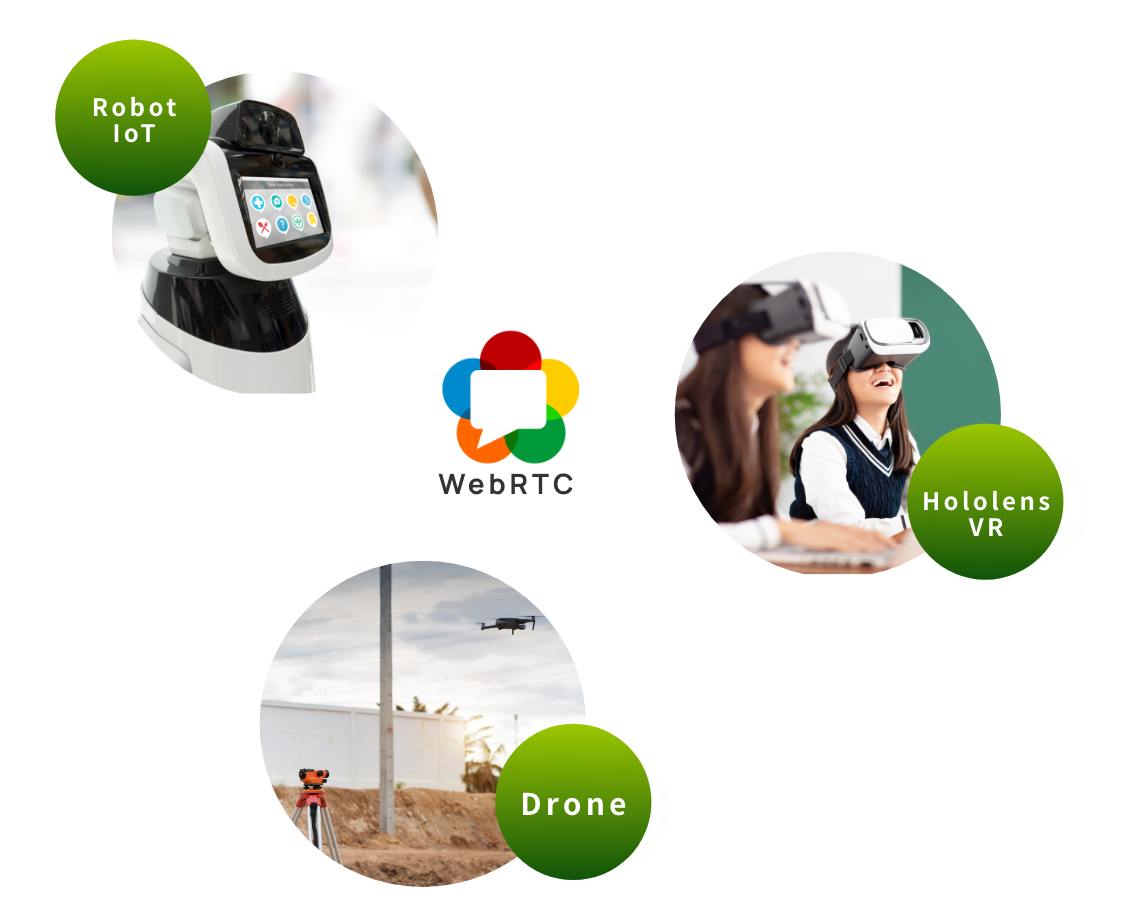
A range of solutions Using different client devices turns the stream into a range of different solutions. For footage from the air, a drone; for 3D footage, VR or HoloLens. WebRTC can also be used to operate robots and IoT products remotely.
Adopting WebRTC takes
real-time communication to the next stage
WebRTC makes real-time, high-quality, low-latency communication easy for anyone to adopt.
Adoption is spreading across education, healthcare, construction, entertainment and more.
For a company or a developer considering real-time communication, WebRTC is a transformative option.