
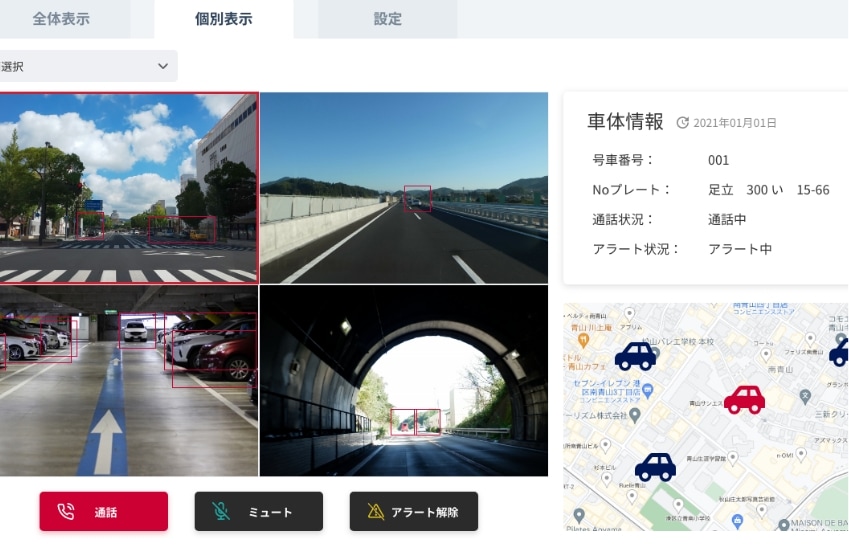
Remote operation system for robots, heavy machinery and similar equipment
Client: a major construction machinery maker
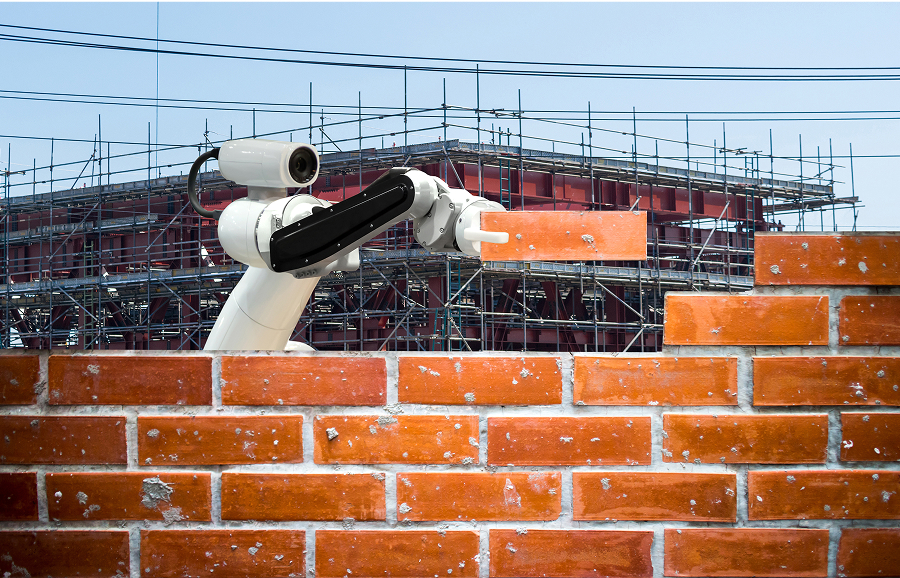
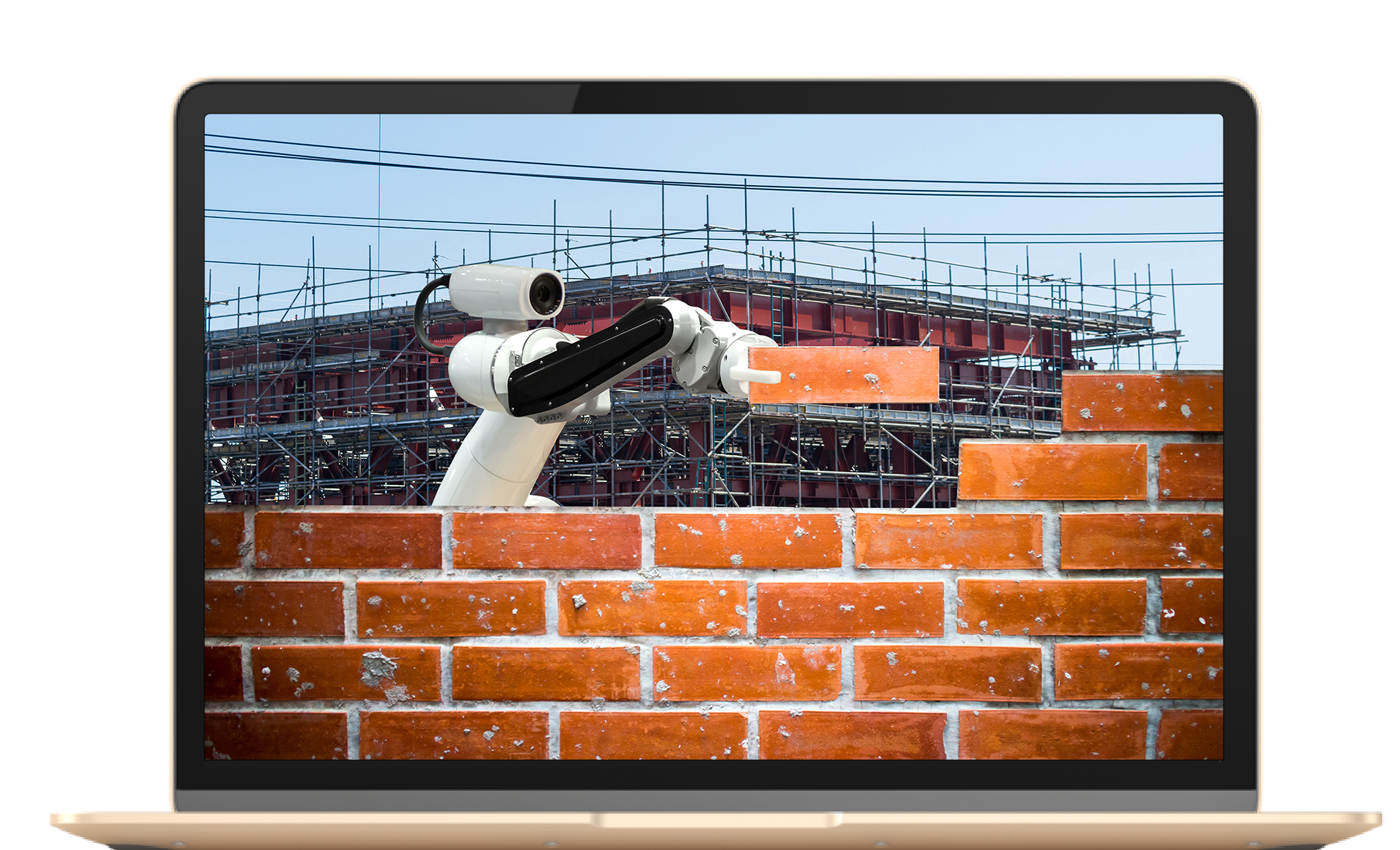
In construction, remote operation of robots, drones and heavy machinery is spreading fast, for safety and for efficiency.
In the system we delivered, the working robots, drones and machines on site each carry an edge computing device (a Jetson, for instance) and a camera. Video and audio of the site are sent back to the office, and the operator drives each machine from a browser-based control screen.
Main features
- Low-latency video streaming over the WebRTC protocol
- Sending several camera feeds
- A range of resolutions and frame rates
- Controlling the equipment over a WebRTC data channel or MQTT
Strong points
01
The edge device is easy to install and set up: a camera and a wireless device (Wi-Fi, a 4G/5G modem) plugged into a Jetson, a Raspberry Pi or similar
02
WebRTC video transmission brings latency down to 80 milliseconds
03
Several cameras can be connected at once, and resolution and frame rate set individually
04
Actuators of various kinds can be driven over the data channel or MQTT
05
Picture quality and bandwidth are tuned to the connection and the hardware
06
Switching camera viewpoint during operation, and AI obstacle detection, are both supported
What it achieves
- This remote operation technology lets work in hazardous areas be done from a distance, safely and efficiently, which cuts risk to people and makes the work go faster.
Remote pachislot demo system
Client: a major event planning company
As an example of remote operation applied to leisure equipment, we built a demo system that plays a real pachislot machine from a distance over the internet. It is used mostly as hands-on remote content at exhibitions and events.

Main features
- Low-latency streaming over the WebRTC protocol
- A range of resolutions and frame rates
- Controlling the equipment through a WebRTC data channel or MQTT
Strong points
01
The live feed appears on the user’s screen, in a web browser, at low latency
02
The buttons are pressed while watching the live stream delivered over the web
03
Pachislot button timing is unforgiving, so video latency is held under 100 msec, which makes it feel like playing the machine in person
What it achieves
- Compared with conventional one-way video, being two-way and real-time makes the experience interactive and immersive.
Remote surveillance camera system
Client: a major security systems company
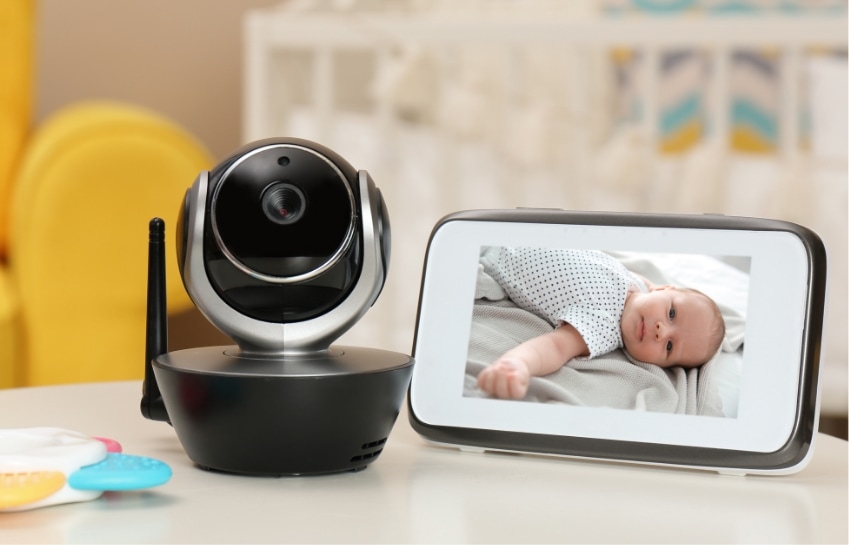
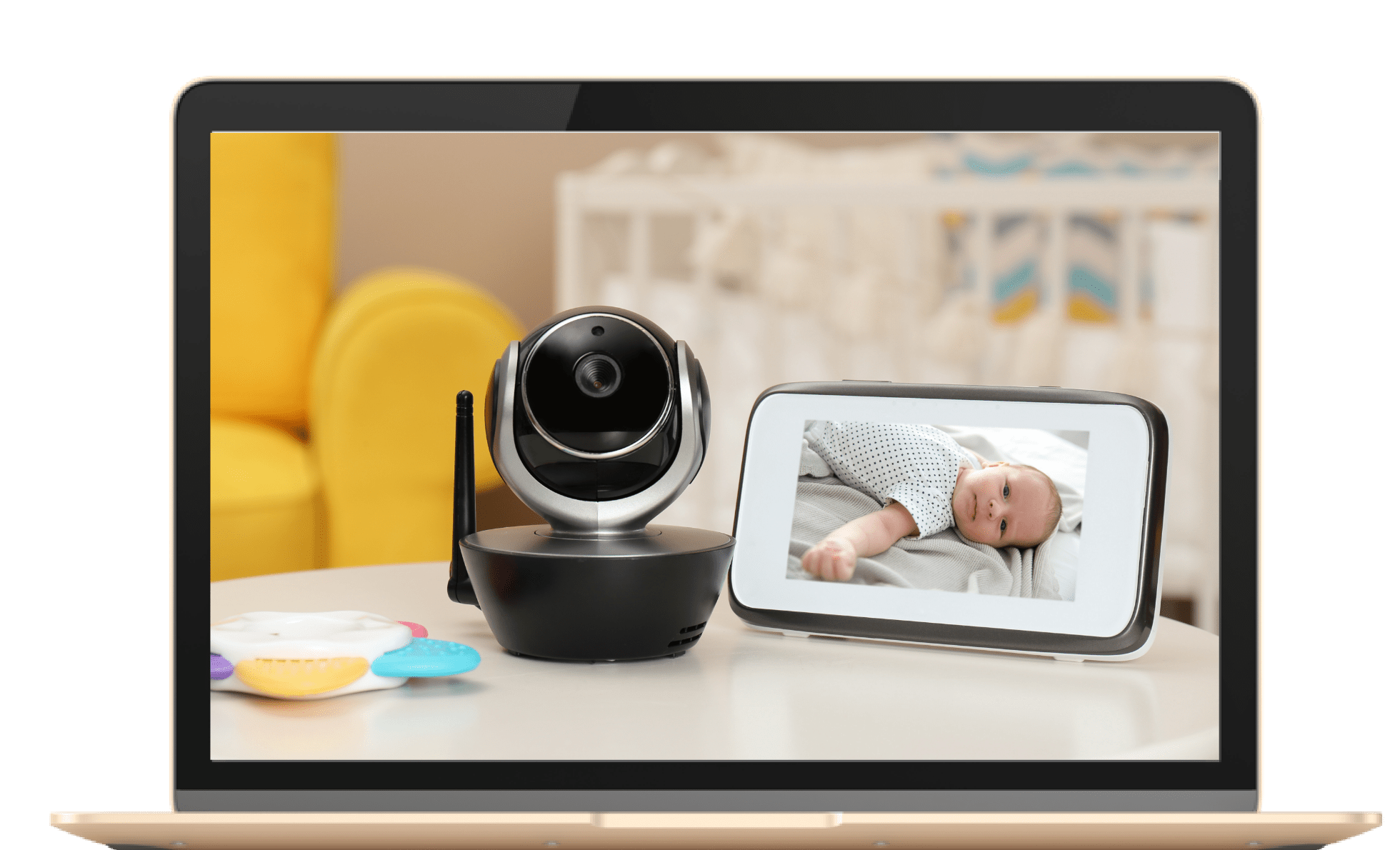
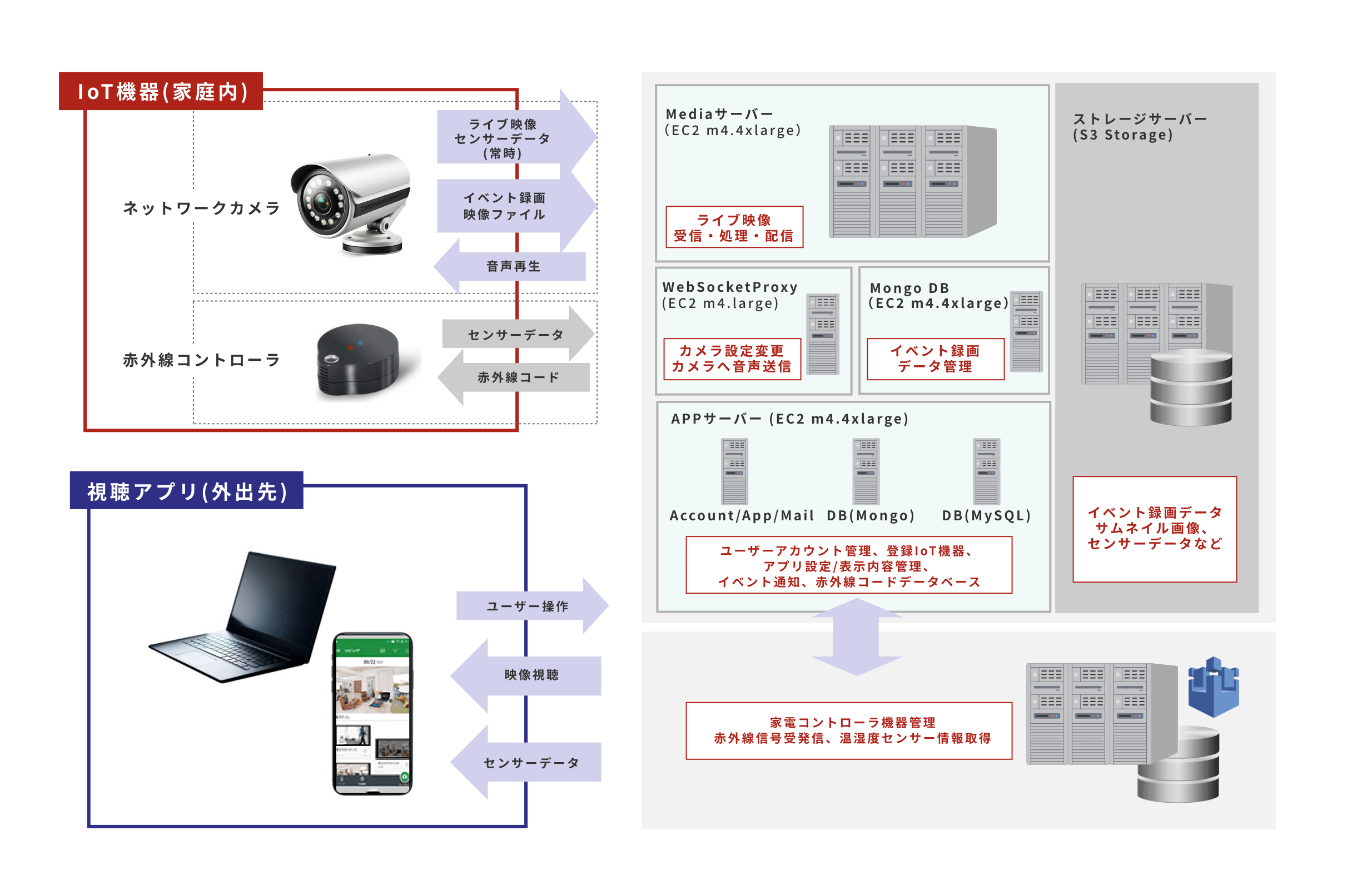
A remote surveillance camera system for homes, offices and commercial premises. Through a smartphone or web app, and tied to anomaly-detection sensors, it covers live viewing, voice, recording and cloud storage.
Main features
- Watch the video, talk, and change camera settings from a smart device
- Tied to sensors that detect changes in temperature, sound or movement
- Footage of an event is recorded and saved to the cloud automatically
- A voice channel for talking with the remote site
Strong points
01
The camera can be watched from a phone or a web app
02
Camera settings can be changed from the phone app
03
Audio can be sent to the camera from the phone app
04
A change in sound or temperature is detected and the footage saved
05
The footage from a detected change can be watched later
06
A SaaS system meant for several companies to share one cloud
07
Built for households but also for shops and offices
08
What happened while nobody was home can be reviewed afterwards
09
It suits not only households but monitoring in a convenience store or a shop
10
A properly sized server build keeps infrastructure cost to a minimum
What it achieves
- This is not merely a surveillance camera but a next-generation remote monitoring system joining AI and IoT, and it is regarded as a good fit for the smart city plans now taking shape.
System configuration
Robot-mounted vehicle monitoring system
Client: a major telecommunications carrier
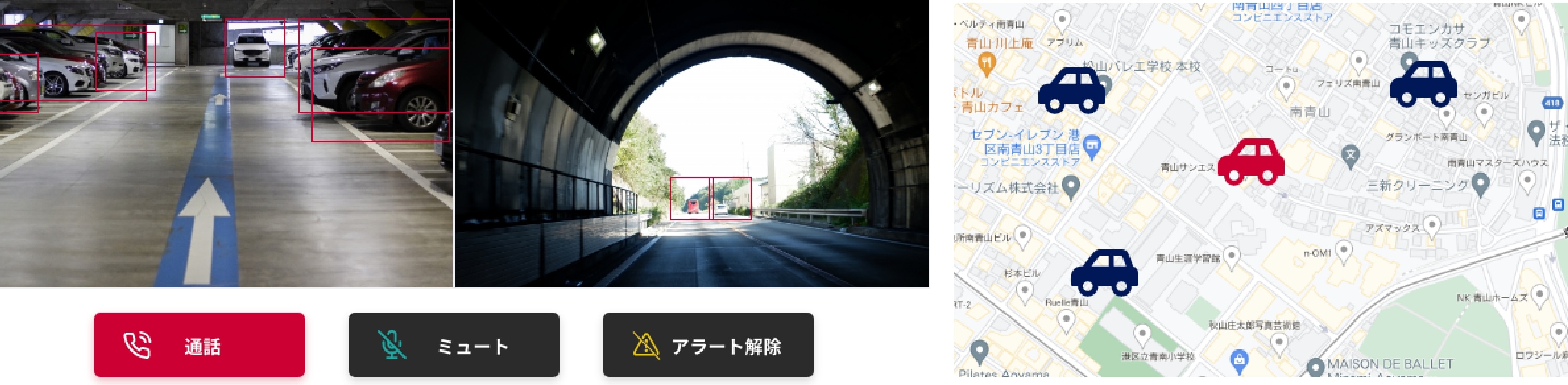
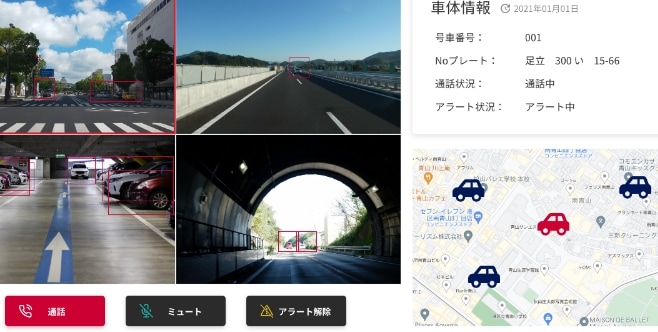
A robot camera and sensor module on the vehicle stream live video to a control centre elsewhere. AI image analysis for object and obstacle detection is built in, so the vehicle can be operated remotely as the situation demands.
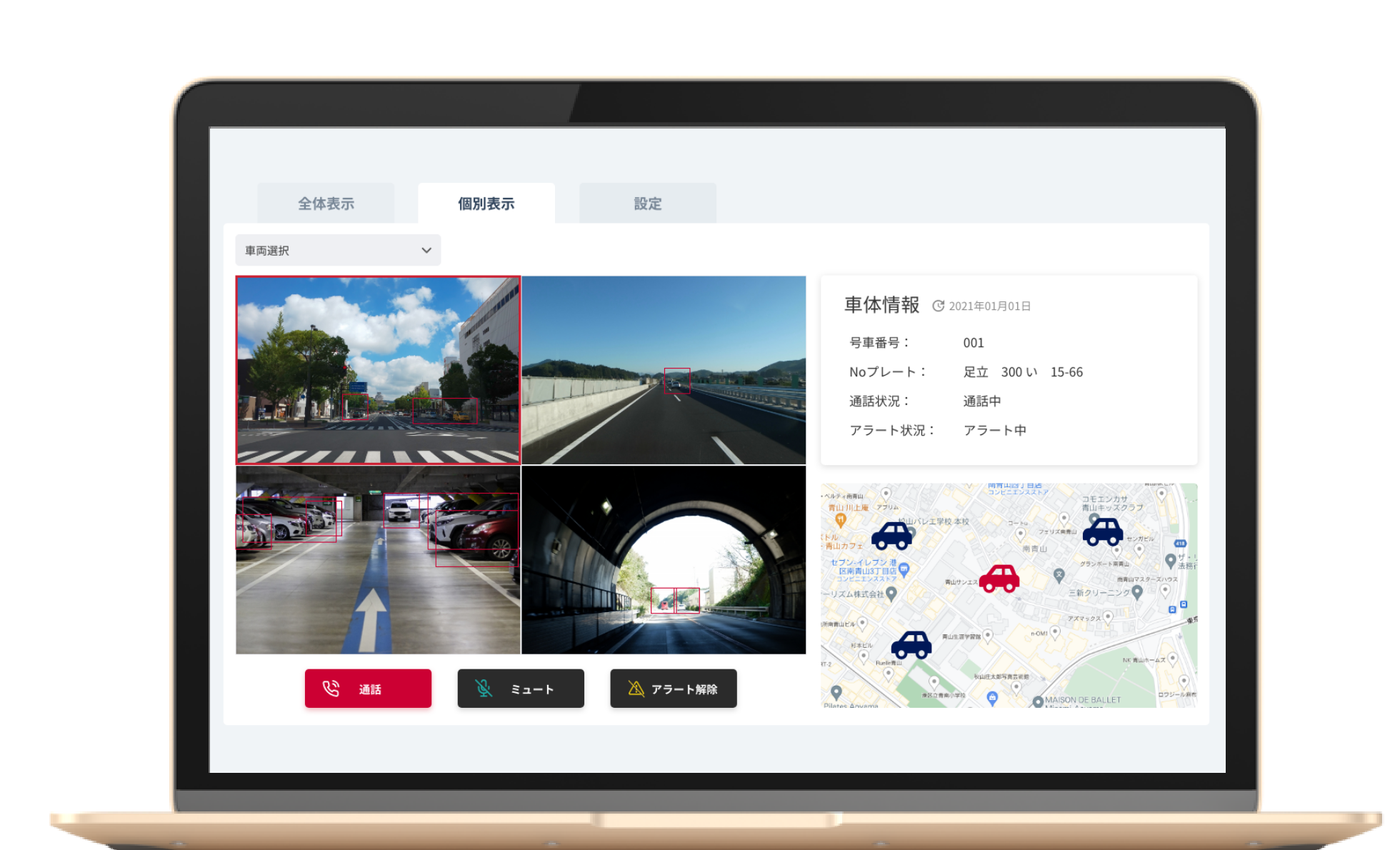
Main features
- Low-latency streaming of the camera feed over the WebRTC protocol
- Receiving and displaying the video (one view or four), and recording
- A voice channel between the centre and a robot, drone or vehicle
Strong points
01
A system that receives several camera feeds from a vehicle and plays them at the monitoring centre
02
Up to four camera feeds stream at once over WebRTC, at low latency
03
The video goes to AI for object recognition, and what it finds is boxed on screen
04
The played feed can be recorded, depending on the setting
05
In an emergency the vehicle and the centre can talk
06
Recorded footage can be analysed and reviewed afterwards
What it achieves
- This vehicle monitoring system is also intended for drone surveillance in a disaster, inspection of transport infrastructure and automated patrols of a construction site - a model for how robots and drones will be operated remotely.
Where this is heading: solving social problems by joining remote operation with robotics
We are pushing remote operation and robotics together to help with social problems: the labour shortage that comes with a falling, ageing population; safety in dangerous work; the gap between regions.
Controlling robots and drones freely from a distance is not a technology that replaces people but one that extends what they can do, and across manufacturing, construction, healthcare, security and logistics it will be a key part of the next generation of infrastructure.
Do get in touch about adopting remote operation
If you are considering building or adopting a remote operation system, we support the whole path: initial discussion, design, development and maintenance.
To discuss a system, request the documentation or try a demo, please get in touch below.
Contact us